Arlington Visa Lawyer

Are you looking for a visa lawyer in Arlington, VA?
At The Law Offices of Ricky Malik, P.C., we are trusted visa lawyers serving clients across Arlington and the surrounding area.
If you want to bring a relative to the United States, hire a foreign worker, or change your own status in Arlington, the visa category you pursue decides what you have to prove and how long it takes. An Arlington, VA visa lawyer at The Law Offices of Ricky Malik, P.C. can match your goal to the right category, prepare the petition, and follow it through every agency that touches the case, from the first filing to the interview. For more than two decades, Ricky Malik has guided clients through both temporary visas and the path to permanent residence. A first meeting, kept confidential, is where we map the path that fits your situation.
Visa Lawyer Arlington, VA
 A visa lawyer helps people enter, work, study, or join family in the United States by matching a person’s goal to the right visa and handling the petition from filing to decision. The work runs through several agencies, since a single case can involve U.S. Citizenship and Immigration Services, the Department of Labor, and a consulate abroad. Small mistakes in that chain cause long delays. A visa attorney in Arlington keeps the filings consistent and the deadlines in view across all of them.
Arlington is an international place, and that shows up in the caseload. Nearly 29.4% of Arlington residents speak a language other than English at home, according to Census QuickFacts, a sign of how many families here have roots in another country. The right visa depends on the purpose of the travel or the family tie, the applicant’s history, and the timing rules that govern each category. Choosing well at the start saves a client from filing in the wrong lane and starting over.
Types of Visa Cases We Handle in Arlington
 Visa work covers a wide field, from a fiancé petition to a multinational transfer. As an Arlington visa attorney, the firm handles both immigrant and nonimmigrant categories, matching each client to the option that fits the goal and the facts.
- Family-based immigration. U.S. citizens and permanent residents can petition for certain relatives, including spouses, children, parents, and siblings, and the immediate relative visa has no annual cap. We prepare the petition, track the priority date, and handle consular processing or adjustment of status, keeping the family informed as the case moves through each stage.
- Fiancé visas. The K-1 visa lets a U.S. citizen’s fiancé enter the country to marry and then apply for residence. We document the relationship, prepare the couple for the consular interview, and set up the adjustment that follows the wedding.
- Green cards. Permanent residence can come through family, employment, or other categories, at a consulate abroad or before an officer in the United States. We confirm eligibility, choose between consular processing and adjustment of status, and build the record that supports approval.
- Employment-based visas. Employers sponsor workers through categories such as H-1B, L-1, O-1, E, and TN, and some lead to permanent residence through labor certification. We coordinate the employer’s filings with the worker’s application and watch the deadlines that keep a person in valid status.
- Student and exchange visas. F, M, and J visas cover study and exchange programs, each with its own rules on work, timing, and travel. We advise on staying in status, on work authorization, and on the options that open once a program ends.
- Visitor and business visas. The B-1 and B-2 categories cover short business trips and tourism. We help with applications, extensions, and changes to another status when plans change, and we flag any travel that could affect a pending case.
- Investor and treaty visas. Categories such as E-2 and EB-5 serve people who invest in a U.S. business. We assess whether an investment meets the requirements, trace the lawful source of funds, and prepare the supporting documentation.
- Immigration waivers. A ground of inadmissibility can block a visa that a person otherwise qualifies for. We evaluate whether a waiver is available and prepare the hardship evidence it requires.
Why Choose The Law Offices of Ricky Malik, P.C. as my Visa Lawyer in Arlington, VA?
 Visa Work Across Business and Family Categories
 Visa Work Across Business and Family Categories
Some firms take only family cases, and others take only business ones. This practice covers both, which matters when a single household has a marriage petition, a work visa, and a student in the mix at the same time. Over more than 20 years, the firm has handled family petitions, employment and investor cases, nonimmigrant visas in the H, L, E, F, and TN categories, consular processing, and visa extensions. That range means a client rarely has to go elsewhere when a case crosses from one category into another, and it lets the firm spot problems in one filing before they affect the next.
Credentials Behind Your Arlington Visa Case
Ricky Malik has met with the U.S. State Department official who oversees the Visa Bulletin, the monthly schedule that governs when immigrant visas become available. He is licensed in Virginia, Maryland, and Washington, D.C., earned his law degree at the University of Maryland, and is a member of AILA. As an immigration lawyer in Arlington, VA, the firm brings that background to visa cases of every size.
What Is Important To Understand About Visa Cases?
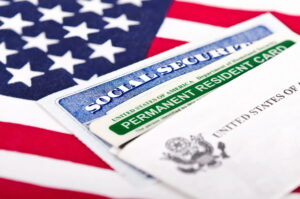 The visa system is a set of separate categories, each with its own eligibility test, its own forms, and its own wait. The rules reward people who plan the whole route before filing the first form. Knowing how the pieces fit together is what keeps a case moving and avoids the resets that add months.
Visa Categories and Eligibility Requirements
Every visa starts with a purpose, and that purpose sets the category and the proof.
- Family categories. Immediate relatives of U.S. citizens and family-preference relatives qualify based on the relationship and, for some, a waiting line. Filing for an immigrant visa runs through a petition and then a consulate or an adjustment application.
- Employment categories. These depend on a job offer, the worker’s qualifications, and sometimes a labor certification that tests the U.S. job market.
- Nonimmigrant categories. Temporary visas for work, study, business, and tourism each carry conditions on how long a person may stay and what they may do. A B-1 business visitor may enter for meetings but not to take a job.
- Investment categories. An EB-5 investor visa and treaty investor visas turn on the amount and source of the investment and the jobs it supports.
- Grounds of inadmissibility. Certain facts in a person’s past can bar a visa unless a waiver applies, so eligibility and admissibility are checked together, not in isolation.
What Is The Visa Case Timeline?
Timelines vary widely by category and by country of birth. A visitor visa can be quick, while a family or employment green card can take years.
- The petition is filed and reviewed by the agency with jurisdiction over it.
- For limited categories, the case waits for a priority date to become current.
- The applicant files for an immigrant visa abroad or adjustment of status in the United States.
- Biometrics are taken and the file is reviewed.
- An interview is scheduled, and interview preparation often decides how smoothly it goes.
What Are Important Aspects of a Visa Case?
A few things shape almost every visa matter. Eligibility comes first, since the wrong category wastes months. History matters too, because a prior overstay, a denial, or a criminal issue can trigger a ground of inadmissibility that calls for extreme hardship evidence and a waiver. Timing runs underneath all of it, as priority dates, status expirations, and travel plans all interact. Accuracy is the last piece, because inconsistent documents are one of the most common reasons a case stalls. A name spelled two ways, a date that does not match a prior filing, or a missing translation can turn a straightforward case into a request for more evidence.
What Should You Bring to Your Visa Consultation?
Bring these to the first meeting so we can give clear advice from the start.
- Passports and any current or expired visas.
- Prior immigration filings, approvals, and denials.
- Documents that prove the family relationship or the job offer.
- Records of any arrests, convictions, or prior immigration violations.
- Notices showing deadlines or upcoming appointments.
By the end of the meeting you will know the goal we are aiming at, the categories you qualify for, and what each one asks of you.
Arlington Visa Resources
Visa cases are decided by federal agencies, so the links below go straight to the offices an Arlington applicant will deal with.
- USCIS field offices include the Washington Field Office in Fairfax, which serves Arlington residents.
- Directory of Visa Categories lists every visa type and its basic rules.
- Employment visa categories explains the temporary work options and how to apply.
- Visa availability charts show when immigrant visa numbers are current for filing.
Reach Out to The Law Offices of Ricky Malik, P.C. to Schedule a Consultation
Visa timelines are long, so preparing a petition correctly the first time protects the months that follow. Pinning down the right category, gathering the proof, and carrying the filings through each agency is the daily work of an Arlington visa attorney. Contact us to set up a first meeting.
Visa Statistics in Arlington, VA
 About 13.2% of residents in Arlington were born abroad, and a substantial portion of households speak a language other than English at home, according to the Immigrants in Virginia profile compiled by the American Immigration Council. Visa work in this area runs through federal agencies rather than county courts, because the categories, quotas, and eligibility rules come from national law. Nationwide, Homeland Security data shows the country has admitted more than a million new lawful permanent residents per year on average since the late 1980s, and Virginia regularly ranks among the more common states of residence for new arrivals. For an Arlington, VA visa attorney, those patterns mean steady demand for work, family, and immigrant visa help.
Key Documents You’ll Need for Your Visa Case
 Every visa category asks for its own proof, but the same handful of document problems sink cases across all of them. Assembling the right records before you file, rather than after a Request for Evidence, keeps a case on schedule. Here is the core set an Arlington visa lawyer tends to build first.
- Identity and civil records. Passports, birth certificates, and marriage or divorce records anchor most filings. Every name and date has to match across the whole file, since officers compare each document against the others and against prior applications. Any record in another language needs a certified English translation attached.
- Proof of a qualifying relationship. Family-based petitions and marriage cases rise or fall on documented history. Joint finances, shared housing, photographs across the timeline, and ongoing communication all help. A sparse file can read as suspicious even when the relationship is genuine.
- Financial support evidence. Most immigrant visa cases require an affidavit of support backed by tax returns, pay records, and proof of employment. A missing signature or an out-of-date tax transcript is one of the more common reasons a case stalls at the last step.
- Employer and qualification records. Work-based filings, including H-1B petitions, depend on job offer letters, position descriptions, and degree or credential evaluations. The employer’s documentation carries as much weight as the applicant’s own, and gaps there slow everything down.
- The medical examination. Immigrant visa applicants complete an exam with an authorized physician inside a set validity window. Scheduling it too early can force a costly repeat, and using a provider who is not approved means starting over.
- Immigration and travel history. Prior petitions, entries, departures, visa stamps, and any arrests belong in the file with supporting records. We would rather disclose and explain an old issue than let an officer discover it and question your credibility.
- Hardship documentation, where it applies. Waiver applications turn on proof of extreme hardship to a qualifying relative, assembled from medical, financial, and country-condition evidence rather than a single letter.
For someone opening an immigrant visa case, or bringing a partner through the K-1 fiancé visa process, the record only grows stronger the earlier this work starts. Our office checks every document against the specific category before submission, because a single missing page can restart a timeline that already runs long.
Arlington Visa Lawyer FAQs
 What is the difference between an immigrant and a nonimmigrant visa?
 What is the difference between an immigrant and a nonimmigrant visa?
A nonimmigrant visa allows a temporary stay for a specific purpose, such as work, study, or a visit, with an expected departure date. An immigrant visa leads to permanent residence and a green card. Many people hold one or more nonimmigrant visas before pursuing an immediate relative visa or another permanent category.
Do I have to leave the United States to get my visa?
Not always. Applicants already in the country in a valid status can often adjust status without departing. Those outside the United States, or ineligible to adjust, finish at a consulate abroad. Leaving with an unresolved unlawful presence issue can trigger a bar, so this decision deserves careful review before anyone books travel.
What is a priority date, and why does it matter?
Your priority date marks your place in line for categories with annual limits. In backlogged family and employment preferences, a visa number becomes available only when your date is current. Immediate relatives of U.S. citizens are not subject to these caps, so those cases usually move without a wait for a number.
Can I switch to a different visa category while I’m in the United States?
Sometimes. Change of status lets certain visa holders move between nonimmigrant categories without leaving, provided they still hold valid status and meet the new category’s requirements. Timing matters, since filing after your status lapses complicates the request. We review whether a change of status or a fresh consular application fits your facts better.
What is a Request for Evidence?
A Request for Evidence, often called an RFE, is a notice asking for more documentation before a decision. It is not a denial. It usually means an officer needs clearer proof of a relationship, finances, or eligibility. Responding fully and on time, with well-organized records, is what separates an approval from a setback.
Can I travel abroad while my case is pending?
That depends on the filing. Leaving during a pending adjustment can be treated as abandoning it unless you first obtain advance parole. Some nonimmigrant categories permit travel and others do not. Confirm your specific situation first, because a wrong assumption here can undo months of work.
What happens if my status expires before a decision?
Falling out of status carries consequences that vary by category and by how much time passes. Some pending applications provide a period of authorized stay, and some do not. Accruing unlawful presence can create future bars to reentry. If your status is close to expiring, raise it with counsel before the date arrives.
How do I check the status of my visa case?
Government systems let you track a pending case using the receipt number from your notice. Consular cases and USCIS filings use different tools, and processing times shift by office and category. A status update tells you where the file sits, though it rarely explains what an officer is weighing behind the scenes.
Can I petition for a relative to immigrate?
Citizens and permanent residents can sponsor a relative within defined categories. Spouses, parents, and minor children of citizens generally move fastest. Adult children and siblings fall into preference categories with longer waits. The petition establishes the relationship, and the relative’s own admissibility gets reviewed separately later in the process.
Could a visa denial put me at risk of removal?
In some situations, yes. A denial that leaves you without status, or an entry problem, can lead to removal proceedings. Depending on the facts, deportation defense or a protection claim such as asylum may become relevant. Reviewing the denial notice quickly gives you the most options before deadlines pass.
Local Information for Arlington Visa Cases
 Federal Processing for Arlington Visa Applicants
 Federal Processing for Arlington Visa Applicants
Visa cases for Arlington residents are decided through federal agencies rather than Virginia state courts, since eligibility and quotas come from national law. Applicants generally follow one of two tracks. Those already in the United States may request adjustment through U.S. Citizenship and Immigration Services, while applicants abroad complete consular processing through the National Visa Center and a U.S. embassy or consulate. Interviews for local adjustment cases are scheduled at the regional field office that covers Northern Virginia. Which track applies depends on where you are, your current status, and the category involved, and getting the sequence right is something an Arlington visa lawyer sorts out early.
What Are Important Local Resources for Arlington Visa Applicants?
Several organizations in and around Arlington offer non-legal support to immigrants and their families, from English classes to case management. This list is provided for convenience and is not an endorsement, and none of these groups substitute for legal counsel on a visa matter.
- Edu-Futuro — 2110 Washington Blvd, Arlington, mentorship, workforce, and family programs for immigrant youth and parents, (703) 228-2560.
- Ethiopian Community Development Council — 901 South Highland Street, Arlington, resettlement and referral services for refugees and immigrants, (703) 685-0510.
- English Empowerment Center — beginning-level English classes across Northern Virginia, formerly the Literacy Council of Northern Virginia, (703) 237-0866.
These groups handle practical, day-to-day needs. Anything touching the visa filing itself belongs with a licensed attorney rather than a non-lawyer service.
About The Law Offices of Ricky Malik, P.C.
Ricky Malik founded the firm and has practiced immigration law for more than twenty years. Born in London into a Hindu Indian family, he went through the U.S. immigration system himself, and that experience shapes how the firm approaches every case. He earned his law degree from the University of Maryland in 2002, belongs to the American Immigration Lawyers Association, and formerly served as co-chair of the AILA-DC Arlington Immigration Court Liaison Committee. Our Arlington immigration lawyer practice covers visas, green cards, and removal defense for clients throughout the region.
What Our Clients Say
★★★★★
“Ricky is a great attorney. He has been so helpful throughout the process. I would definitely recommend him and will use him again in the futures.” — Mimin Amas
Read more reviews on our Google Business Profile.
Contact The Law Offices of Ricky Malik, P.C.
 A visa case moves forward once you know which category fits and what evidence supports it. We start by reviewing your situation, explaining the realistic options, and answering the questions that matter for your specific facts. Contact us to schedule a consultation with an Arlington visa attorney who will look at the full picture before recommending a path. Our intake staff replies to new inquiries promptly, and we work with applicants across Northern Virginia, Maryland, and the District of Columbia.
Hear From Our Client Community